What ISPO Munich Taught Me About Entering the European Hockey Market
A first-time sports exhibitor’s practical lessons for distributors, importers, and founders
By Sabrina Lee
Project Owner & Manufacturer-Side Operator
Patented Rechargeable LED Hockey Puck | ISPO Munich 2025 Exhibitor
20+ Years in International B2B Trade
Why this article exists
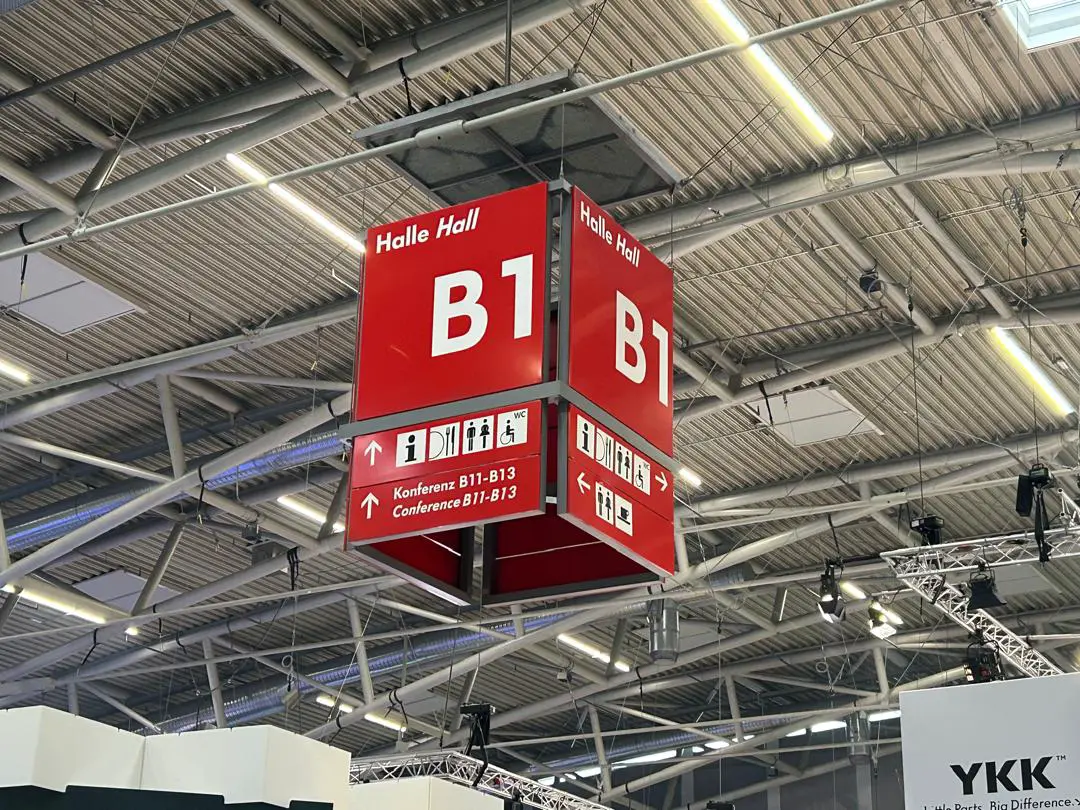
In December 2025, I exhibited at ISPO Munich for the first time.
It was also my first trade show in the sports industry.
I’ve spent most of my career in B2B international trade for LED lighting products, serving distributors across Latin America.
Sports hardware — especially within the European ecosystem — was new territory for me:
new buyers, stricter compliance expectations, and a very different product conversation.
This article is written for two very specific audiences:
B2B buyers (distributors, importers, brand agents, clubs) evaluating innovative hockey products
Founders / manufacturers considering entering the European sports market
No hype. No marketing slogans.
Just what actually mattered on the show floor.
The product I brought to ISPO
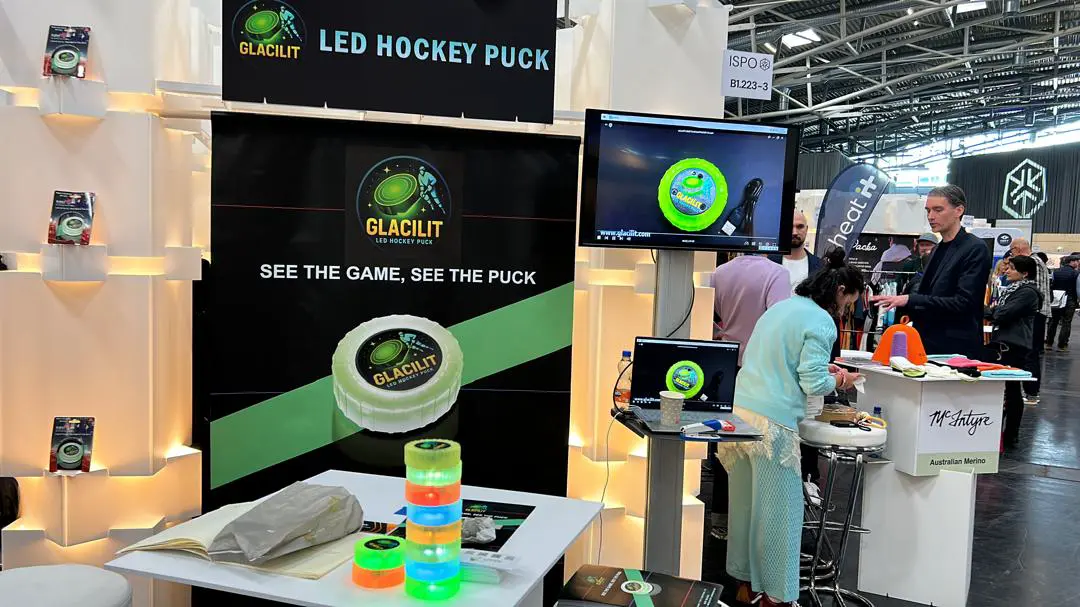
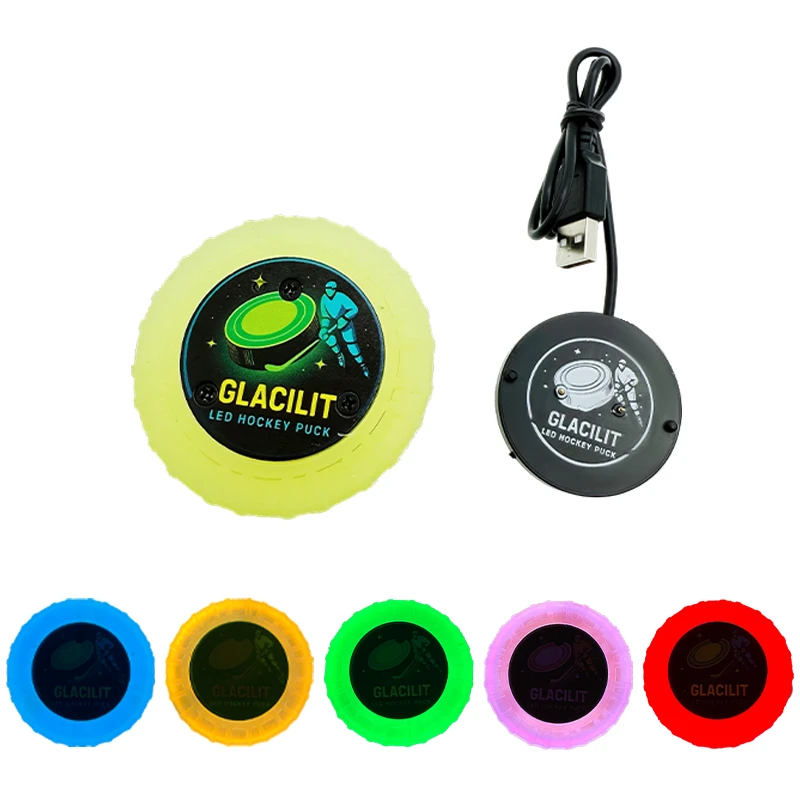
At ISPO Munich 2025, I exhibited GLACILIT, a patented rechargeable LED hockey puck, designed for:
training scenarios
recreational and visibility-focused use
events and special hockey activities
The puck keeps a familiar size and weight profile while introducing controlled LED illumination for better visibility.
From day one, this project has been built with an IP-first strategy.
We have active filings under PCT and multiple national routes (CN / DE / US / CA / JP).
Compliance work (CE, labeling, battery documentation) is in progress, not treated as an afterthought.
I operate this project from the manufacturer side, not as a reseller.
That shaped how I approached every conversation at ISPO.
The Startup Area: a fast reality check
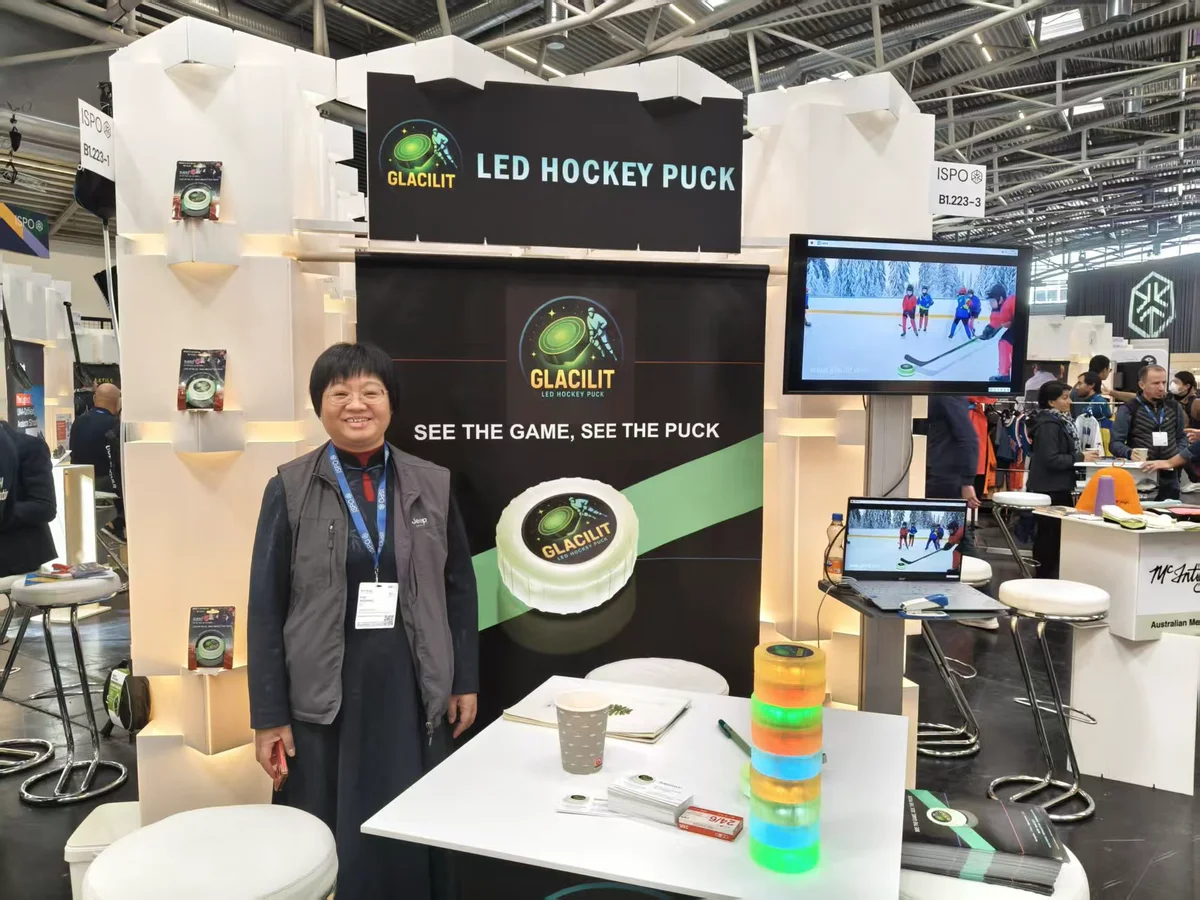
Exhibiting in the Startup Area (Hall B1) changed the tone of discussions immediately.
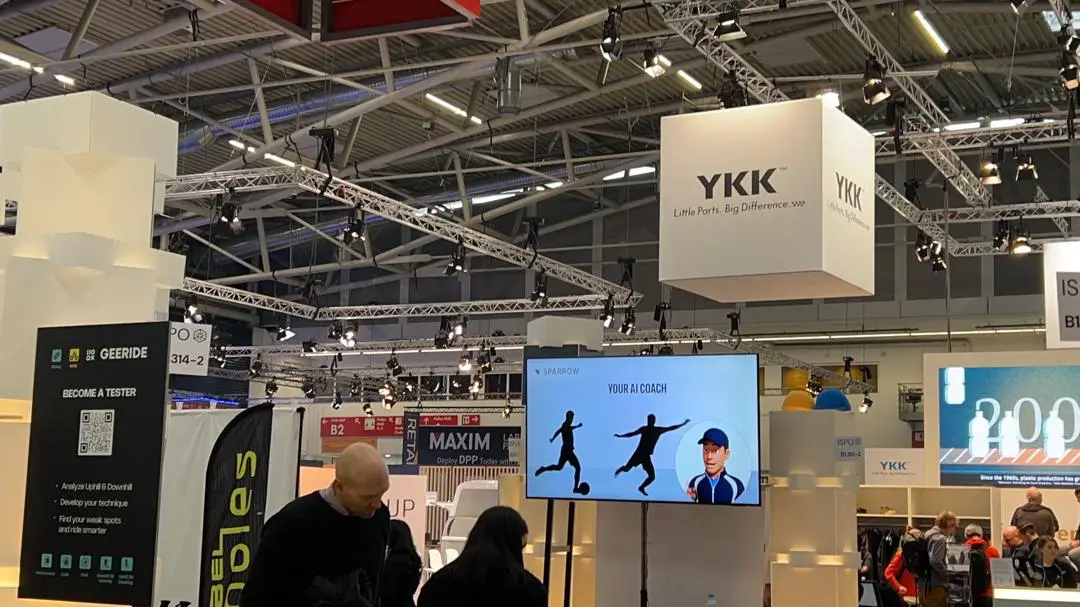
Around us were innovation-led sports hardware companies — some already blending hardware with software, training data, or AI-driven features.
Crowdfunding models, community launches, and pilot-first strategies were common.
One insight became very clear:
In European sports hardware, innovation is not a slogan.
Buyers expect a clear explanation of:
what changes,
why it matters,
and how it fits into their channel economics.
If you can’t explain that in two minutes, the conversation ends politely — and quickly.
The three buyer questions I heard again and again
Across dozens of real conversations, three questions kept repeating.
1. “EU compliance — where are you now?”
In Europe, compliance is not a future step.
It is part of the product definition.
Instead of saying “we will do CE”, I learned to present:
a compliance roadmap
a documentation structure (labeling, product info, battery-related files)
what is ready now vs. in progress
That shift alone made conversations far more serious.
2. “What’s the price — and how do we test it?”
Serious buyers don’t ask “is it cool?”
They ask about price early.
But price is never just a number. It reflects:
target margin
retail positioning
return-rate risk
speed of market testing
The best discussions happened when price was linked to a pilot structure, not a theoretical large order.
3. “Does it feel like a real hockey puck?”
This question reveals deeper concerns:
user acceptance
training authenticity
compatibility with existing habits
My approach is straightforward:
The puck is designed around familiar expectations, but intended use scenarios must be stated clearly.
Clarity builds more trust than exaggeration.
What I will do differently going forward
Lesson 1: Every industry has its own language
In lighting trade, buyers talk about lumen output, beam patterns, container optimization.
At ISPO, the language was about:
compliance readiness
channel fit
pilot scalability
risk control
Same B2B logic — different vocabulary.
Lesson 2: Pilot-first builds trust faster than big promises
Many buyers don’t want a large first order.
They want to test demand with limited risk.
That aligns perfectly with our current European strategy:
Pilot MOQ: 300 pcs
Pilot goals: sell-through speed, user feedback, channel fit
Next step: scale only if KPIs are met
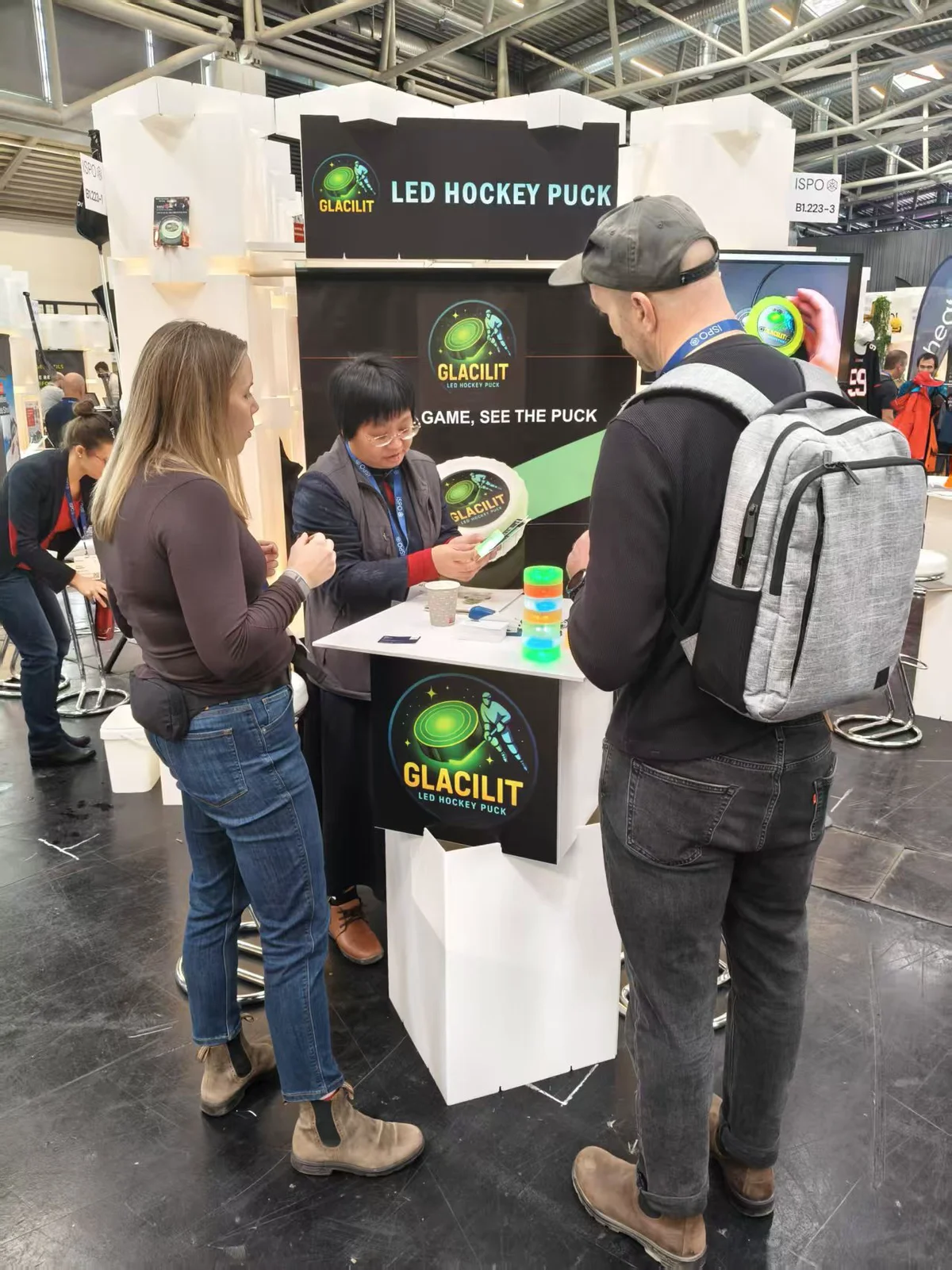
Lesson 3: Real booth context matters more than expected
For Europe-facing B2B buyers, real-world presence matters.
Booth photos, live demos, and on-site context reduce the “is this real?” friction dramatically.
That’s one reason this article exists — while the event context is still fresh.
Who this product is for (and who it isn’t)
This project is B2B only.
We are currently opening limited pilot partnerships with:
distributors / importers
brand agents
pro shops and retail chains
clubs or training organizations with procurement capability
Pilot MOQ: 300 pcs
If you’re interested, please reach out with:
your country
your channel type
how you would position an innovative hockey puck in your market
We’ll respond with a B2B intro deck, pilot structure, pricing framework, and a high-level compliance roadmap summary.
Final reflection
ISPO Munich 2025 was my entry point into the European sports ecosystem.
With ISPO moving to Amsterdam, the industry is clearly entering a new phase:
faster cycles, higher expectations, and less patience for vague ideas.
For us, the real work starts now —
building the right partnerships, validating channel fit, and scaling responsibly,
without sacrificing IP protection or product integrity.

Sabrina
founder of Glacilit
Sabrina is the founder of Glacilit, leading innovation in professional LED hockey training equipment for B2B partners worldwide. She oversees the development of Glacilit’s LED Hockey Puck—also known as the Flash Hockey Puck—prioritizing visibility, impact resistance, and consistent performance on the ice. Guided by a user‑centric approach, Sabrina works closely with coaches and athletes to turn real training feedback into practical features, ensuring reliable supply, scalable procurement, and long‑term technical support for clubs, training facilities, and distributors.